

Before you read on, one piece of advice I give every bride: try the cape on over the actual dress, not just in your head. A capelet that looks perfect on a hanger can sit differently over a structured bodice, and the right length is the one that makes your shoulders look relaxed, not covered up.
A strapless wedding dress shows off the neckline and shoulders, which is exactly why so many brides fall for it. The catch is that the day rarely stays strapless-friendly from start to finish. A cool church, an outdoor ceremony at dusk, a long reception under air conditioning or simply wanting a different look for the evening all point to the same answer: a layer that is as considered as the dress itself.
A cardigan or wrap can feel like an afterthought. A bridal cape is designed as part of the outfit.
Why a beaded cape works over a strapless gown
Strapless bodices leave a clean line across the chest and shoulders. A capelet sits right over that line and frames it, rather than cutting across it the way a jacket does. Because most capes fasten at the collar and fall open at the front, the bodice and waist of your gown stay visible. You get coverage over the shoulders and upper arms without losing the shape of the dress.
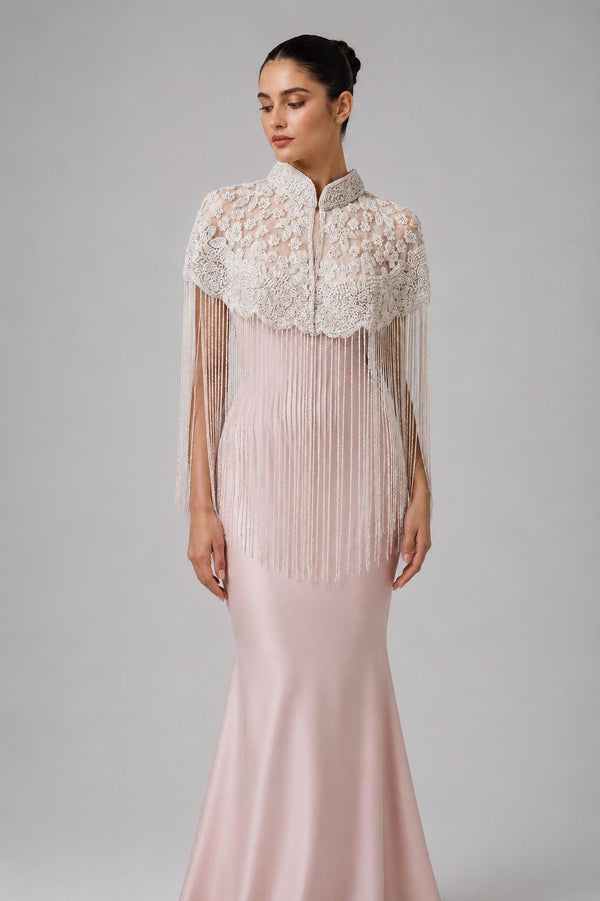
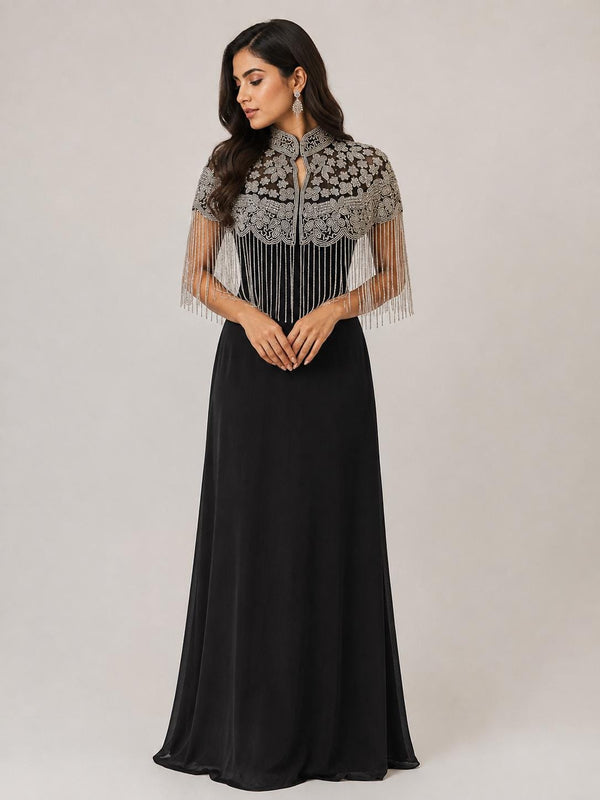
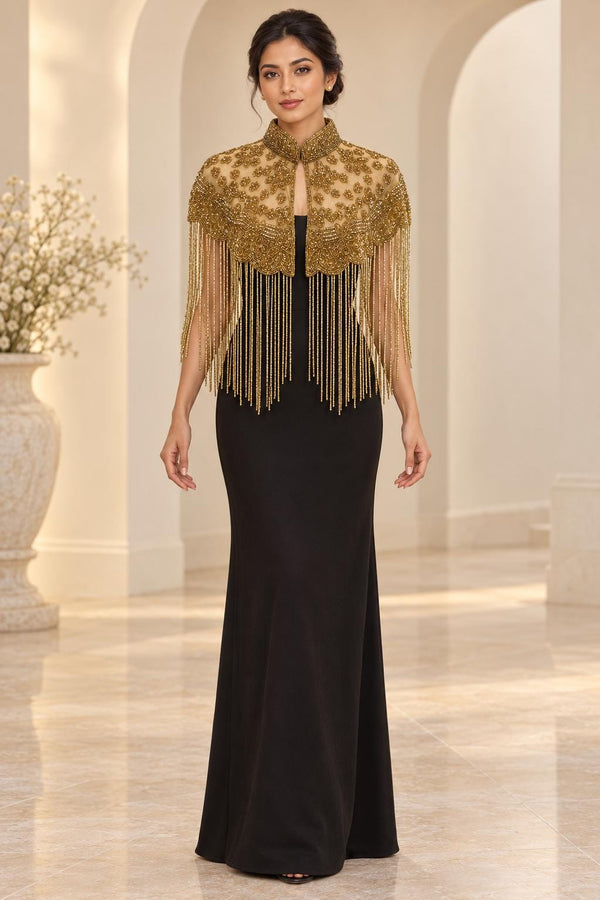
Beading adds the other half of the appeal. Hand beaded fringe moves when you walk, catches candlelight at the reception and photographs beautifully from behind, which matters more than most brides expect. Think of the walk down the aisle, the first dance and the photo of you looking back over your shoulder.
Choosing the right length
- Short capelets (around 18 to 20 inches) finish around the upper arm. They suit fitted mermaid and column gowns where you want the silhouette to stay sharp.
- Mid length capes (around 22 to 24 inches) cover the shoulders and reach mid back. A good all-rounder for A-line and ball gown skirts.
- Longer capes (around 26 inches) give more drama from behind and more warmth. Lovely for winter weddings and cathedral style ceremonies.
Every piece in our Bridal and Ivory Capes collection lists its length, measured from collar to the tip of the fringe.
Matching colour to your dress
Wedding whites are not all the same. Bright white, ivory, champagne and blush all read differently next to beads.
- Ivory and soft white gowns pair naturally with ivory and pearl toned beadwork.
- Champagne, nude or gold toned gowns come alive with gold beading, especially in the evening.
- Bright white gowns work best with clear, pearl or silver beads, which avoid making the dress look yellow by comparison.
If you can, hold the cape against a fabric swatch from your gown in daylight before deciding.
Cape instead of a veil?
Plenty of brides now choose a cape in place of a veil, or wear a veil for the ceremony and switch to a cape for the reception. A cape gives you the same sense of occasion in photos without anything on your hair, and it is far easier to dance in. If you do wear both, keep the veil simple so the beadwork on your shoulders stays the focus.
Practical tips for the day
- Bring the cape to a fitting so your seamstress can check how the collar sits on the bodice.
- Keep jewellery at the neck minimal. Earrings carry the look better than a necklace under a beaded collar.
- Ask your photographer for at least one back view while you are wearing it. The fringe is the shot.
- Pack it flat in its box on the day, not on a hanger, so the fringe stays neat.
Browse the full range of hand beaded capes, all free size and shipped free worldwide from Melbourne.
Not sure which one suits your outfit? Send a photo of your dress through our contact page and I will give you an honest suggestion.
Anita
Beaded Capes, Melbourne