

These words get mixed up all the time, even in shops. Here is the plain English version, plus the rule of thumb I use myself: if the dress has a beautiful back, go longer; if it has a beautiful neckline, go shorter.
Shopping for something to wear over an evening dress quickly turns into a vocabulary test. Cape, capelet, shrug, bolero, stole, wrap. They are often used as if they mean the same thing, but each one changes the outline of an outfit in a different way. Knowing the difference makes it much easier to pick the right one.
Cape
A cape hangs from the shoulders with no sleeves and usually falls open or loose around the body. Traditional capes can reach the hip or even the floor. In evening wear, a cape is a deliberate, dramatic layer that you notice from across a room and from behind.
A cape and two capelets, side by side
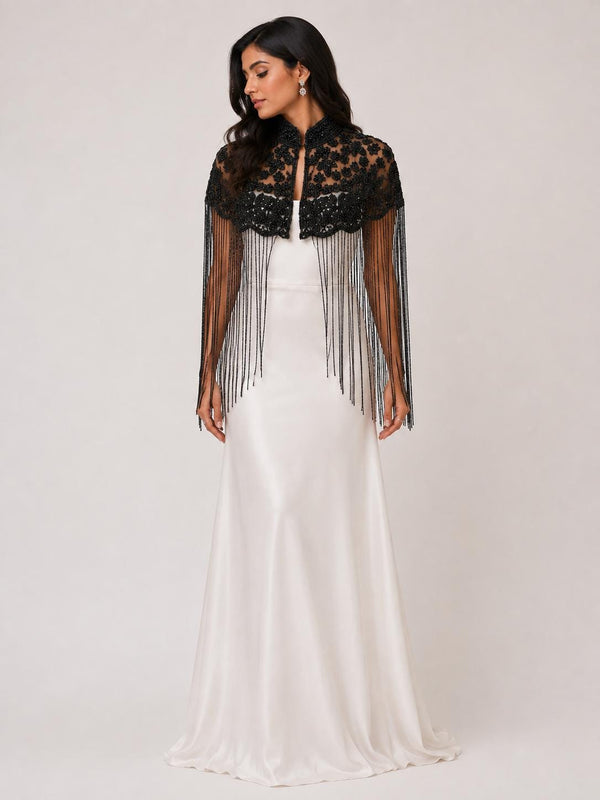
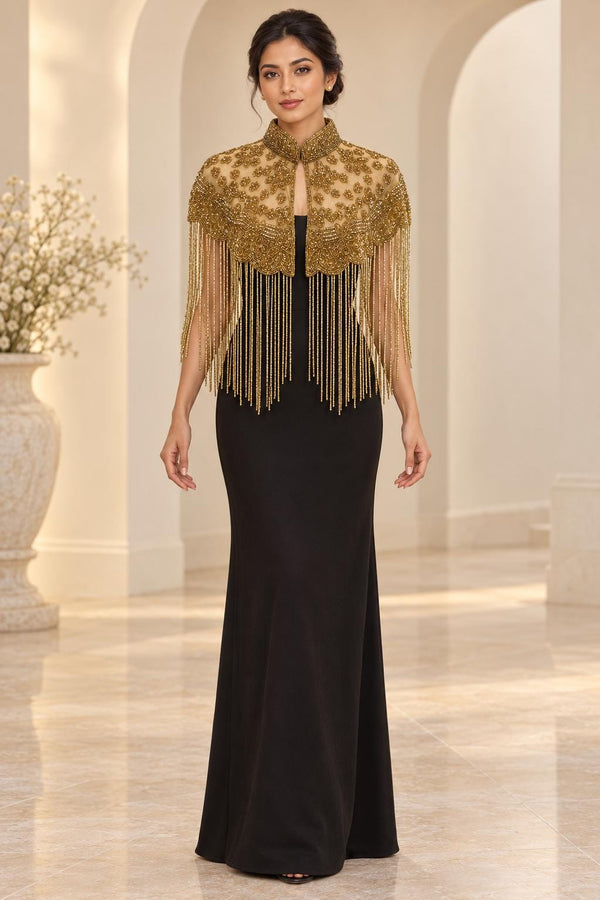
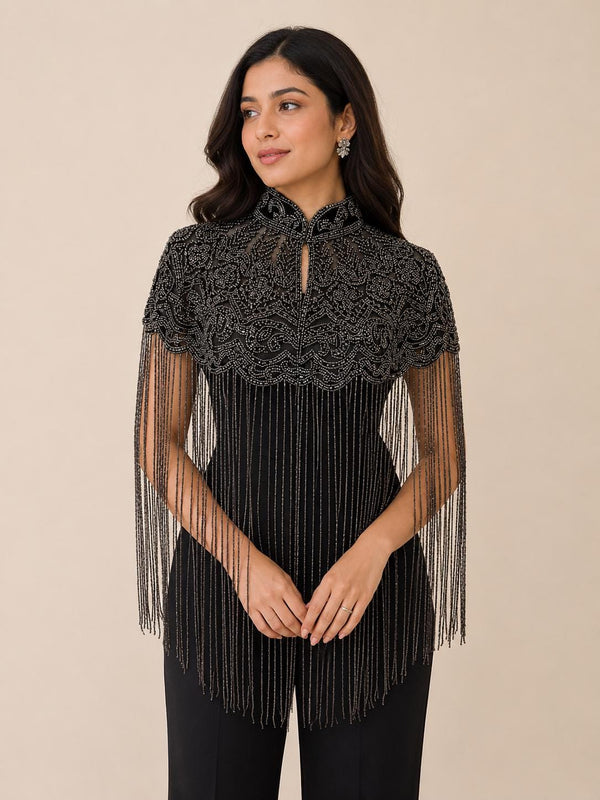
Capelet
A capelet is simply a short cape. It covers the shoulders and finishes somewhere between the upper arm and the elbow. Capelets are lighter, easier to wear with a fitted gown and less likely to compete with a full skirt. Most of the pieces we make sit in this range, from around 18 to 26 inches long.
Shrug
A shrug has sleeves, or at least armholes, and finishes high on the back, often just below the shoulder blades. It covers the arms more than the shoulders. Shrugs are practical but tend to look more casual, and they hide the neckline of a strapless or sweetheart dress.
Bolero
A bolero is a cropped jacket with sleeves that stops above the waist. It is more structured than a shrug and traditionally paired with formal or bridal wear. It gives the most coverage but the least movement.
Wrap, stole or shawl
A rectangle of fabric draped around the shoulders. Easy and adaptable, but it needs to be held or adjusted all night, which is why many people switch to a cape that fastens at the collar.
Which should you choose?
- Strapless or sweetheart neckline: a capelet. It frames the neckline instead of covering it.
- Fitted column or mermaid gown: a short capelet keeps the silhouette sharp.
- Full skirt or ball gown: a longer cape balances the volume of the skirt.
- You want arm coverage for a church ceremony: a longer cape or a bolero.
- You want to dance: a cape or capelet. Fringe moves with you, sleeves restrict you.
Why beading changes the choice
A plain shrug is functional. A hand beaded capelet is a statement piece in its own right, which means you can wear a very simple dress and still look dressed up. That is the idea behind everything in our beaded capes collection: one piece that does the heavy lifting for the whole outfit.
Not sure which one suits your outfit? Send a photo of your dress through our contact page and I will give you an honest suggestion.
Anita
Beaded Capes, Melbourne